
Clear Acne Scars — Naturally
Platelet-rich plasma combined with microneedling to reduce pitted scars, rebuild collagen, and restore smooth, even-toned skin — using your body's own healing factors.
What Is Acne Scar Treatment with PRP?
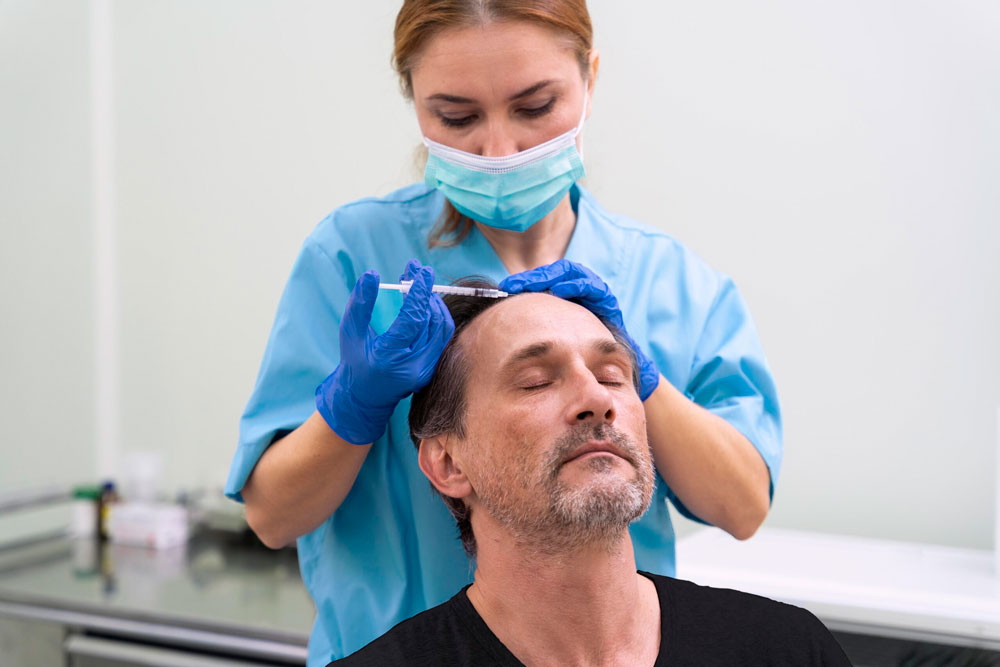
Acne scar treatment with PRP (platelet-rich plasma) is a regenerative, non-surgical procedure that uses concentrated growth factors drawn from your own blood to repair damaged skin tissue. A small blood sample is centrifuged to isolate the platelet-rich plasma, which is then applied to scarred areas via microneedling or direct injection. The growth factors trigger your skin's natural healing cascade — stimulating collagen and elastin production, improving texture, and progressively reducing the appearance of both pitted and superficial acne scars. Because PRP is derived from your own blood, there is no risk of allergic reaction and no synthetic chemicals are introduced. Most patients see visible improvement after 2–3 sessions, with results continuing to develop over 3–6 months as collagen remodels.
Key Benefits
Reduces Pitted & Superficial Scars
Growth factors in PRP penetrate scar tissue and stimulate remodeling, visibly reducing both shallow and deeper pitted acne scars over a series of treatments.
Promotes Collagen & Elastin
PRP triggers the body's collagen-building cascade, improving skin structure, firmness, and elasticity — the same mechanisms responsible for youthful, smooth skin.
Improves Skin Tone & Texture
Beyond scars, PRP treatment evens out discoloration, reduces post-inflammatory hyperpigmentation, and leaves skin with a smoother, more refined surface texture.
Minimally Invasive, Minimal Downtime
Microneedling with PRP typically causes mild redness for 24–48 hours. No surgery, no general anesthesia, and no extended recovery period are required.
Natural — No Synthetic Chemicals
PRP is made entirely from your own blood. There are no additives, no synthetic growth hormones, and no risk of rejection or allergic reaction.
Progressive, Long-Lasting Results
Because PRP works by rebuilding collagen, results continue to improve for months after each session and are long-lasting — not a temporary fix.
Conditions We Treat
The most common types of permanent acne scarring — PRP with microneedling is especially effective at remodeling these.
Dark spots and discoloration left after acne heals respond well to PRP's skin-renewal effects.
Uneven texture, enlarged pores, and superficial scarring are addressed through the collagen-stimulating effects of PRP.
Who Is This Treatment For?
- Adults with mild to severe acne scars (pitted, rolling, boxcar, or icepick)
- Patients who prefer a natural, non-surgical approach to skin rejuvenation
- People with post-inflammatory hyperpigmentation or uneven skin tone
- Patients who want to avoid synthetic chemicals or dermal fillers
- Those seeking progressive, long-lasting results rather than temporary fixes
- Patients in generally good health with realistic expectations
What to Expect
- 1
Consultation & Skin Assessment
Meet with Dr. Stratt or our provider team to assess your scar type, skin tone, and goals. A personalized treatment plan is developed — including number of sessions recommended.
- 2
Blood Draw
A small sample of blood is drawn from your arm — similar to a routine lab draw. The entire preparation takes about 15 minutes.
- 3
Platelet Separation (Centrifuge)
Your blood sample is spun in a centrifuge to separate and concentrate the platelets, producing platelet-rich plasma with growth factors at 5–10x normal concentration.
- 4
Microneedling or Direct Injection
PRP is applied to scarred areas using a microneedling device (creating microchannels that drive PRP deep into the dermis) or via direct injection for targeted areas.
- 5
Healing & Progressive Results
Your skin begins natural regeneration immediately. Mild redness subsides within 24–48 hours. Visible improvements appear over 4–8 weeks and continue for 3–6 months.
Results Timeline
Most patients complete 3 sessions spaced 4–6 weeks apart. Initial improvements are visible after the first session; significant improvement in scar depth and texture typically becomes apparent by session 3. Collagen remodeling continues for up to 6 months after the final treatment.
Acne scars are among the most persistent and emotionally difficult skin concerns — a reminder of breakouts long after the acne itself has cleared. At LifeBoost MD, we use platelet-rich plasma therapy combined with microneedling to address the underlying skin architecture rather than just the surface appearance.
PRP acne scar treatment works by delivering a concentrated dose of your body’s own growth factors directly into scarred tissue, triggering collagen remodeling and new skin cell production. The result is progressive, natural improvement — not a temporary cover-up.
Frequently Asked Questions
Most patients benefit from 3 sessions spaced 4–6 weeks apart. The exact number depends on scar severity, depth, and skin type. Mild scarring may respond after 2 sessions; deeper or more extensive scarring may require 4–6 sessions. Dr. Stratt will provide a personalized recommendation during your consultation.
A topical numbing cream is applied before treatment to minimize discomfort. Most patients report the sensation as mild pressure or warmth rather than pain. The procedure typically takes 30–45 minutes. Post-treatment redness is similar to mild sunburn and resolves within 24–48 hours.
Because PRP works by rebuilding your skin's collagen structure — not just masking the surface — results are long-lasting. Many patients maintain results for 1–2 years or longer. A single maintenance session annually can extend results indefinitely.
PRP treatment is not appropriate for patients with active acne breakouts (treatment should begin only after acne is controlled), certain blood disorders, those on blood thinners, or those who are pregnant. A full medical history is reviewed at consultation.
Yes. For deeper or more stubborn scarring, PRP can be combined with laser therapy, dermal fillers (to fill pitted scars), or additional microneedling passes. Dr. Stratt may recommend a combination approach based on your scar type and goals.
Minimal. Most patients experience redness and mild swelling for 24–48 hours, similar to a mild sunburn. You can return to work the following day in most cases. Avoiding direct sun exposure and wearing SPF is recommended for one week post-treatment.
Some patients notice improved skin tone and texture within 2–4 weeks of the first session. The full effect — including visible scar reduction — develops over 3–6 months as collagen rebuilds. Results continue to improve between sessions.
Medical References & Citations
- Emer J, et al. Combination therapy with platelet-rich plasma and fractional microneedling for the treatment of acne scarring. J Clin Aesthet Dermatol. 2014.
- Asif M, et al. Combined autologous platelet-rich plasma with microneedling verses microneedling with distilled water in the treatment of atrophic acne scars. J Cosmet Dermatol. 2016.
- Dogra S, et al. PRP for atrophic acne scars. Dermatol Surg. 2014.