
Grow Your Hair Back, Naturally
Platelet-rich plasma scalp injections awaken dormant follicles, increase hair density, and reverse early androgenetic alopecia — without drugs or surgery.
What Is PRP Hair Restoration?
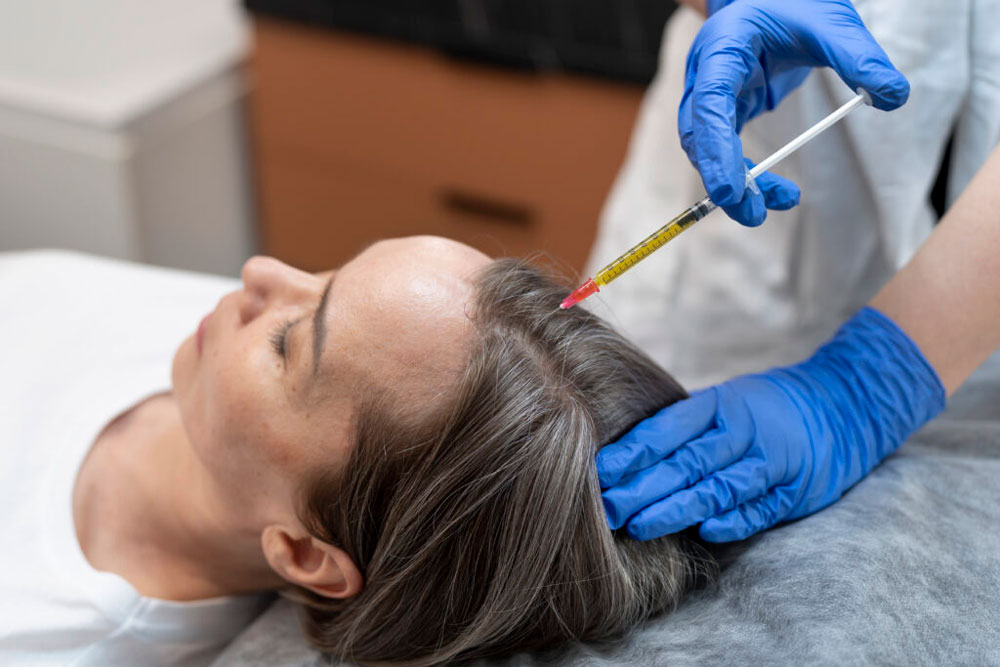
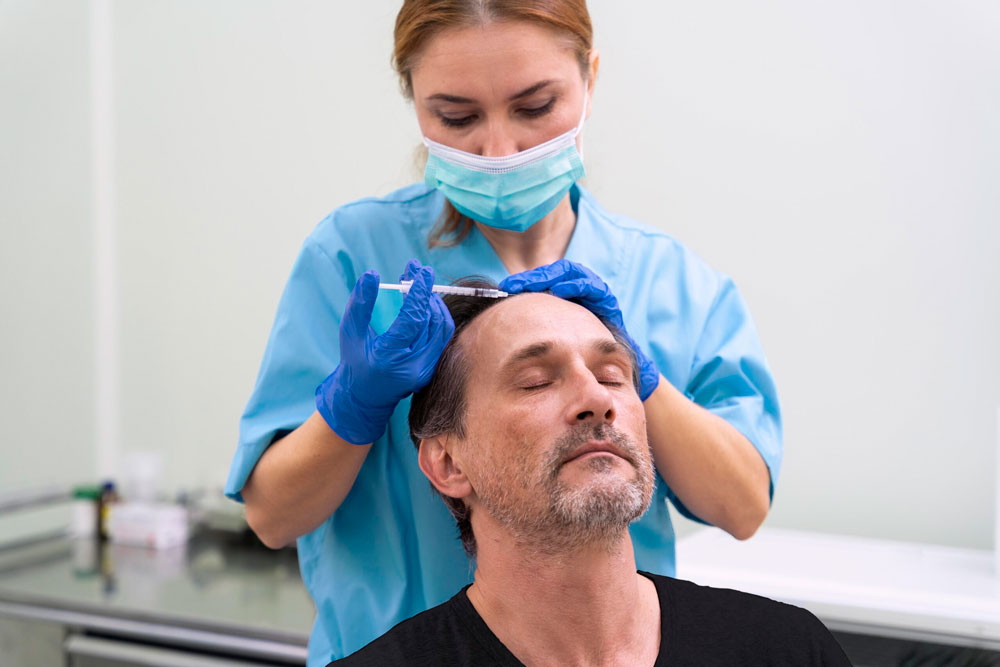
PRP Hair Restoration is a regenerative treatment that uses platelet-rich plasma derived from your own blood to stimulate hair follicles at the cellular level, reactivating miniaturized follicles and extending the growth (anagen) phase of the hair cycle. Hair loss — whether from androgenetic alopecia (pattern baldness), hormonal changes, or other causes — is driven by follicle miniaturization and premature entry into the resting (telogen) phase. Growth factors in PRP — particularly PDGF, VEGF, and IGF-1 — signal follicle cells to proliferate, increase blood supply to the scalp, and reverse the miniaturization process. At LifeBoost MD, PRP hair therapy is performed with high-concentration PRP using advanced centrifuge protocols for maximum growth factor yield.
Key Benefits
Stimulates Dormant Follicles
PRP growth factors reactivate follicles in the early telogen (resting) phase, extending active hair growth.
Increases Hair Thickness & Density
Patients typically see thicker, fuller hair shafts as follicle function is restored — not just more hairs, but healthier ones.
100% Natural — Your Own Cells
No drugs, no chemicals, no synthetic compounds. PRP is derived entirely from your own blood, with zero risk of allergic reaction.
No Surgery, No Downtime
PRP is performed in under an hour with minimal discomfort. Patients return to normal activities the same day.
Proven by Clinical Research
Multiple randomized controlled trials demonstrate significant improvements in hair count and shaft caliber with PRP therapy for androgenetic alopecia.
Complements Other Treatments
PRP works synergistically with minoxidil, finasteride, or hair transplantation to enhance and accelerate results.
Conditions We Treat
Who Is This Treatment For?
- Men and women with early-to-moderate androgenetic alopecia (pattern hair loss)
- Patients with diffuse hair thinning or decreased density
- Individuals who prefer non-pharmaceutical hair restoration options
- Patients complementing a hair transplant procedure
- Anyone experiencing post-hormonal or post-pregnancy hair shedding
What to Expect
- 1
Scalp Consultation & Assessment
Dr. Stratt evaluates your hair loss pattern, density, and scalp health to confirm PRP candidacy and set realistic expectations.
- 2
Blood Draw & Processing
Blood is drawn and centrifuged to isolate PRP with a platelet concentration 5–8x higher than normal blood.
- 3
Scalp Preparation
The treatment area is cleansed and a topical numbing agent may be applied for comfort.
- 4
Scalp Injections
PRP is injected across the thinning areas of the scalp using a fine needle, targeting the hair follicle level. Treatment takes approximately 45–60 minutes.
- 5
Treatment Series
Initial protocol: 3 sessions spaced 4–6 weeks apart. Maintenance: 1–2 sessions per year to sustain results.
Results Timeline
Most patients notice reduced shedding within 4–8 weeks. Visible new hair growth and increased density typically becomes apparent at 3–4 months. Full results are evaluated at 6 months. A maintenance injection every 6–12 months helps sustain and optimize outcomes long-term.
Frequently Asked Questions
Multiple clinical studies show PRP produces statistically significant improvements in hair density and shaft caliber compared to placebo — particularly for androgenetic alopecia in its early-to-moderate stages. Results vary by individual, but the majority of patients at LifeBoost MD report noticeable improvement. PRP is most effective in patients who still have existing follicles that can be reactivated.
PRP, minoxidil (Rogaine), and finasteride (Propecia) work through different mechanisms. PRP addresses follicle biology directly through growth factors, while minoxidil increases blood flow and finasteride blocks DHT conversion. For many patients, combining PRP with minoxidil produces superior results compared to either alone.
The scalp has many nerve endings, so injections are more sensitive than, say, a knee injection. We use topical anesthetic to minimize discomfort. Most patients tolerate the procedure well and describe it as mild to moderate discomfort — not painful.
A standard initial protocol is 3 sessions spaced 4–6 weeks apart. Some patients see improvement after a single session, but the full course is recommended for best outcomes. Annual maintenance sessions help preserve results long-term.
Medical References & Citations
- Gentile P, et al. The Effect of Platelet-Rich Plasma in Hair Regrowth: A Randomized Placebo-Controlled Trial. Stem Cells Transl Med. 2015.
- Alves R, Grimalt R. A Review of Platelet-Rich Plasma: History, Biology, Mechanism of Action, and Classification. Skin Appendage Disord. 2018.
- Schiavone G, et al. Platelet-rich plasma for androgenetic alopecia: a pilot study. Dermatol Surg. 2014.